



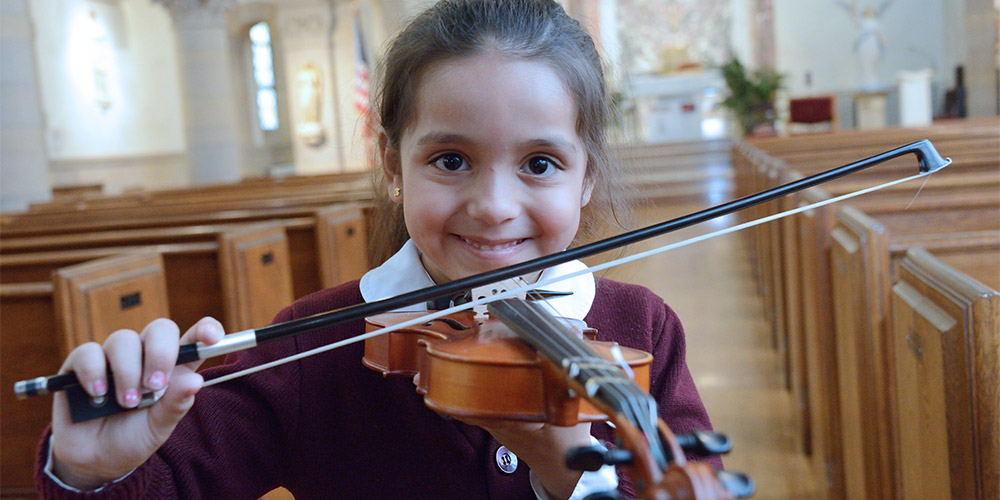
In our Catholic elementary schools, music is both an art and a sacred means of engaging mind, heart, and spirit. Aligned with the New York State Next Generation Learning Standards for the Arts, our program offers a comprehensive musical education from early childhood through eighth grade, focusing on three core processes:
- Creating – Composing and improvising original music.
- Performing – Building technical skill, understanding, and confidence.
- Responding – Listening to and interpreting music with cultural, emotional, and spiritual insight.
Students develop musical literacy through rhythm, melody, harmony, expression, form, and timbre, exploring music’s ties to culture, identity, and faith. Sacred music holds a central place, deepening students’ theological, historical, and artistic understanding of liturgical works.
Music in our schools fosters creativity, discipline, empathy, and joy, nurturing both artistic skill and spiritual identity while honoring the role of music in the Church and in each student’s faith journey
At every grade level, students develop core musical skills in:
- Rhythm – Timing, beats, and patterns
- Melody – Pitch and flow
- Harmony – Chords and layered sounds
- Expression – Mood, emotion, and dynamics
- Form – Musical structure and organization
- Timbre – Unique qualities of voices and instruments
In Catholic schools, music is also worship and theological reflection. Our curriculum emphasizes sacred music, inviting students to study liturgical works through theological, historical, and musical perspectives. By singing, listening, and performing, they grow both artistically and spiritually.
Ultimately, music forms the whole child—fostering creativity, discipline, empathy, and joy—while nurturing lifelong appreciation as personal expression and communal celebration within the life of the Church.